
Building financial confidence in middle school classrooms across metro Atlanta
Big Brothers Big Sisters of Metro Atlanta (BBBSMA) expanded its commitment to youth empowerment by bringing the Wells Fargo Hands on Banking Financial Literacy Module into five partner middle schools across Metro Atlanta. Through the Level Up mentoring program, this initiative reached more than 400 seventh-grade students at Russell, Bunche, Young, and Price Middle Schools in Atlanta Public Schools, as well as Lithonia Middle School in DeKalb County Schools.

The goal was simple: equip students with practical financial knowledge they can carry with them far beyond the classroom.
Each of these partner schools is designated as a Title I school under the Elementary and Secondary Education Act. This means they serve a high percentage of students from low-income households, often determined by eligibility for free or reduced-price lunch.
These schools are also located in ZIP codes identified by the United Way of Greater Atlanta as having low or very low child well-being. This index measures 14 indicators, including high school graduation rates, college and career readiness, and the percentage of children living below the poverty line. Together, these factors highlight the long-term challenges many students face within their communities.
Across BBBSMA programs, the youth served often experience barriers that directly impact economic mobility and access to opportunity. Among the children enrolled in the Level Up program in 2024, 88 percent lived in low-income households, 66 percent lived in single-parent households, and 11 percent had one or more parents who have been incarcerated. The student population was primarily Black, with 94 percent identifying as Black, 4 percent as multiracial, and 2 percent as Hispanic.
Financial education is a critical life skill
In partnership with Wells Fargo, trained BBBSMA lead mentors delivered a four-week financial literacy curriculum embedded into weekly Level Up sessions. The lessons were adapted from the Hands-on Banking program and designed to meet students at their current level of understanding while preparing them for real-life financial decisions.
The curriculum centered on three key learning areas:
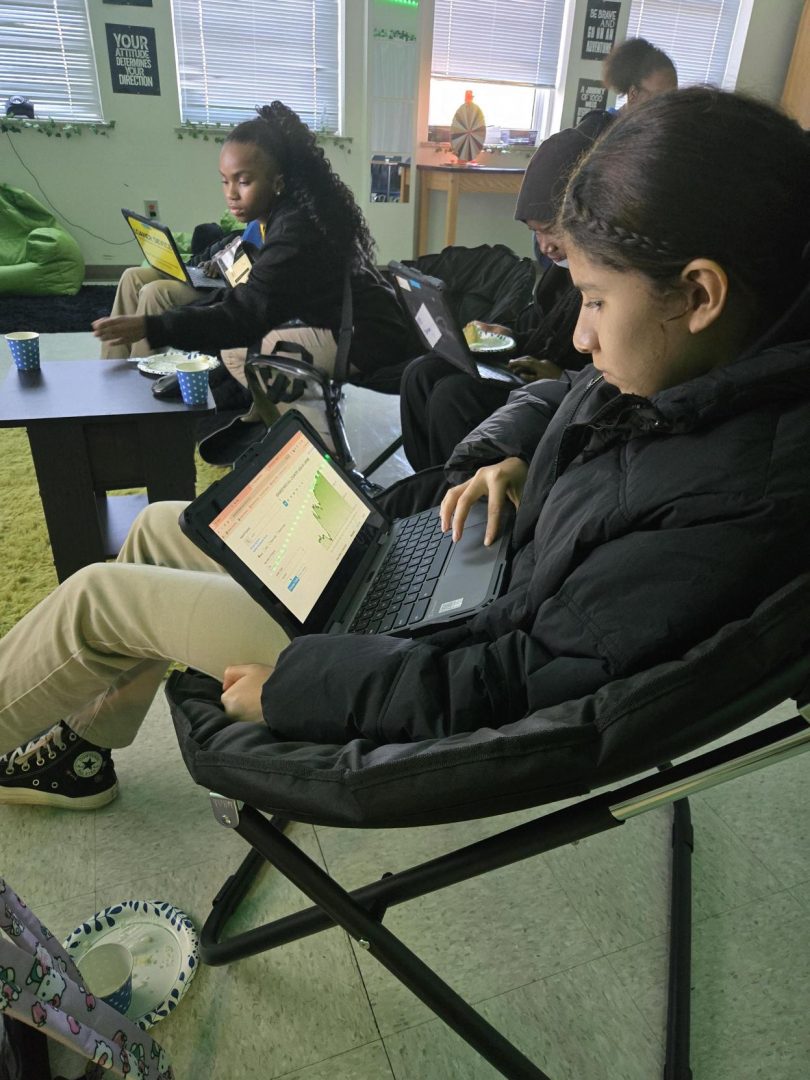
- You and your money: Students explored earning potential, how choices affect financial outcomes, and how to get the most value for their money.
- Banking, saving, and spending: Littles worked through budgeting exercises, developed savings goals, and practiced structuring a basic spending plan.
- Credit and loans: Mentors introduced the concepts of credit, interest, and responsible borrowing, emphasizing how financial habits build trust and long-term stability.
Mentors supplemented the curriculum with scenario-based activities and simulations. Students were assigned different life situations, such as being a college student, a single parent, or a working adult. From there, they made budgeting decisions related to housing, transportation, groceries, childcare, and other necessities. These exercises helped students see how financial responsibilities shift depending on life circumstances and income.
From worksheets to real-life application
One of the most impactful components of the program was a hands-on budgeting project tied to the students’ end-of-year celebration. In small groups, Littles were given the task of planning the event’s food and essentials while staying within a $90 budget to serve more than 50 students.
They researched local stores, calculated costs, accounted for taxes, and made real trade-offs between wants and needs. In one group, students initially planned to order pizza, but after reviewing their budget, they switched to hot dogs and chips to stay under their limit. Rather than feeling discouraged, they saw the power of adaptation and decision-making.
For many students, this was their first experience making financial choices that affected a larger group. It shifted abstract concepts into tangible responsibility.
As one mentor shared, “The ‘Rent and Bills’ activity really hit home. They were shocked by how fast expenses add up.” Another observed how engaged students became when they realized they were planning an event they usually just attend, not organize.
One Little summed it up simply: “I learned how to budget my money.” Another student reflected on how overwhelming budgeting could feel at first. In one activity, she discovered she was $405 short of covering her expenses based on her assigned scenario. While frustrating, the moment turned into a powerful lesson about financial planning, trade-offs, and the importance of adjusting expectations.
Through group work, reflection, and discussion, students built confidence in tackling complex topics. They learned that mistakes are part of the process and that financial literacy is not about being perfect. It is about being informed and intentional.
Thank you, Wells Fargo.
BBBSMA extends deep gratitude to Wells Fargo for their Financial Health Sponsorship, which made this month of programming possible. Their support allowed mentors to deliver meaningful, consistent financial education to youth who often have limited access to these resources.
By investing in financial literacy at an early age, Wells Fargo helped provide confidence, critical thinking skills, and a foundation for long-term decision-making. Littles in the Level Up program are leaving the classroom better prepared to envision a future where they can make informed choices for themselves and their families.